Help Guests Plan Their Visit with Advanced GEO & Local SEO Services
A guest choosing tonight needs the right menu, hours and a working way to book or order. GEO for Restaurants brings those details together through restaurant SEO, local search and GEO for independent venues. Start with the service period or guest journey that needs attention.
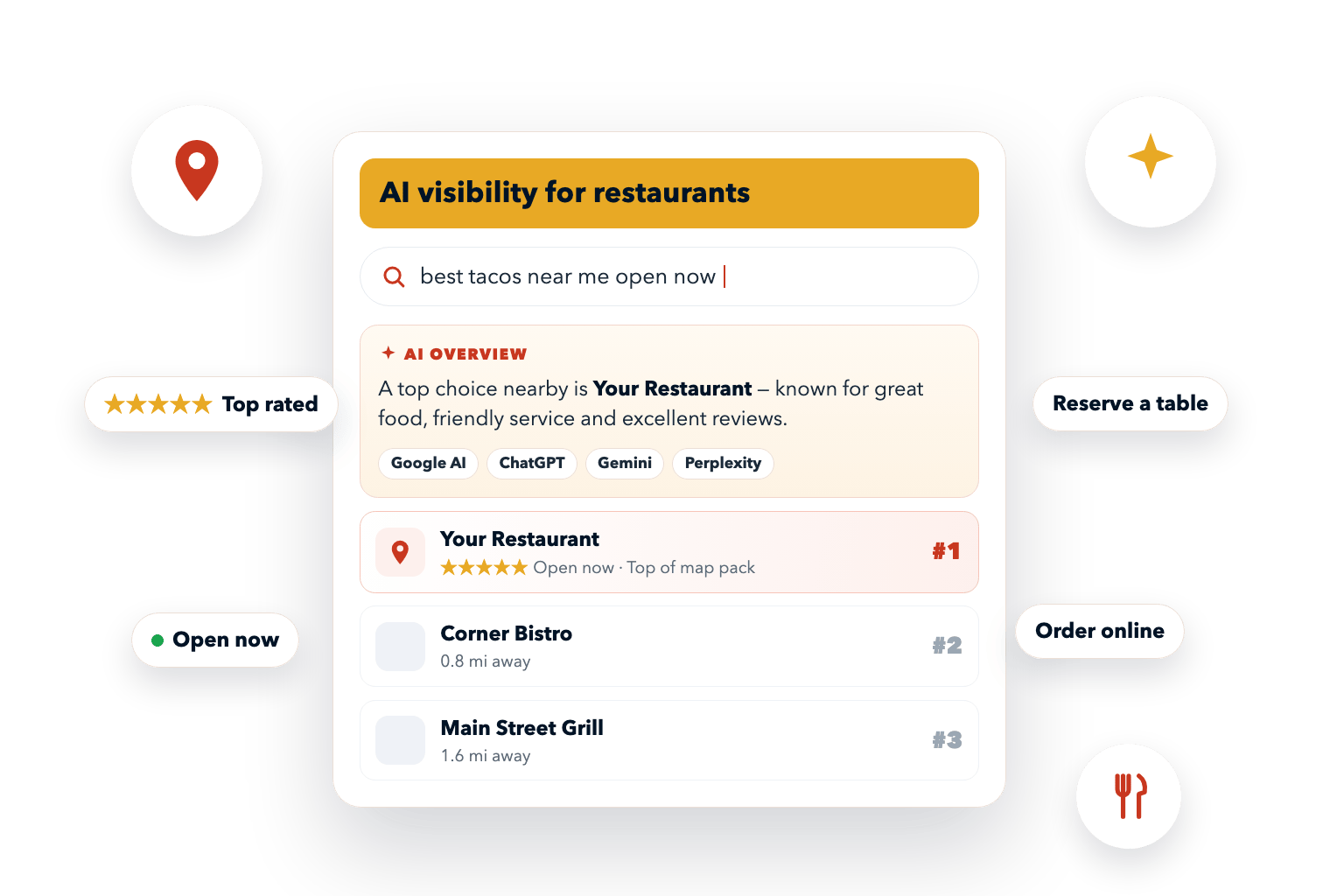
Illustrative search graphic. Rankings and reviews shown are examples.
Give diners the details to choose a visit
Accurate menus and visit information help a guest decide whether your venue fits the occasion. The adjacent search visual is an illustration, not a live map ranking or an actual recommendation.
Make the next visit easier to plan
Tell guests what is available when
Lunch, dinner, brunch and late service may have different menus and hours. We check whether the public information makes those distinctions clear.
Connect discovery to a useful next step
A guest looking for a table needs a reservation path. Someone ordering takeaway needs the correct menu and ordering link. The review follows each journey on a phone.
Give each real venue its own details
Addresses, service options and accessibility information should belong to the venue they describe. A location page earns its place by answering local guest questions.
Build the search plan around the service you run
Restaurant information changes with the operation. A new menu, a holiday opening or a booking-system change can leave conflicting details across public pages. We begin with the current facts supplied by your team and identify where guests encounter a different answer.
The resulting plan separates information updates from content and technical work. It names the location, service period and next action, so the person responsible for menus, listings or reservations can resolve the right issue.
Free Restaurant Audit- A guest decides on an occasionlunch, a date, a group meal or takeaway
- They compare nearby optionscuisine, location and service time
- They check the menu and venuecurrent dishes and practical visit details
- They choose how to proceedreserve, call, walk in or order
- They use the correct destinationa working booking or ordering path
An audit organized around guest decisions
Confirm the operating facts
Collect the current menu, service hours, address and ordering or booking destinations for each real venue.
Trace a guest journey
Follow a public search or listing to the website and the intended action. Record unclear information and broken or misleading handoffs.
Assign the corrections
List the page or profile, the correct detail and the person who owns the update. Separate urgent factual fixes from new content ideas.
Measure the action available
Agree which booking, call or ordering events can be observed. Keep website interactions separate from confirmed covers and sales.
These are review steps and example deliverables, not measured client results.
Restaurant search work with the operation in view
Menu and service information
Review readable menu content, dish descriptions and service periods. Your team verifies prices, availability and any dietary or allergen statements.
Local listings and venue facts
Reconcile the real address, hours, contact details and service options across the profiles included in the agreed scope.
Booking and ordering journeys
Check how guests reach the right reservation or ordering destination, especially from a phone and from each location page.
Occasion and neighborhood content
Create useful pages only when there is a distinct offering to explain, such as private dining or a real venue serving a neighborhood.
GEO and search reporting
Document how venue information appears in sampled search experiences. Report observed actions without presenting an impression as a seated guest.
What a useful restaurant finding looks like
These examples describe how we evaluate a page. They are not testimonials or client performance claims.
An outdated service time
A listing says the kitchen is open after the website says it closes. The finding identifies the conflict and asks the operator to confirm the correct hours.
An unclear reservation handoff
The book button opens a general venue directory. The next action is to link the guest to the correct location or explain the booking options.
A missing private dining detail
A group organizer cannot find capacity or how to enquire. The content brief asks for approved facts before a private dining page is written.